
Horizontal Development Financing: What Developers Must Know

Horizontal development financing is defined as specialized capital used to fund the foundational infrastructure of a real estate project before any vertical construction begins. This financing phase covers grading, roads, utilities, and drainage that transform raw land into a build-ready site. For real estate professionals and investors, understanding what is horizontal development financing means understanding the first and most critical funding phase of any ground-up project. Without it, no building permits get issued, no vertical lender commits capital, and no project moves forward. Brookmontcapital structures and sources this type of financing for developers and sponsors nationwide.
What does horizontal development financing cover?
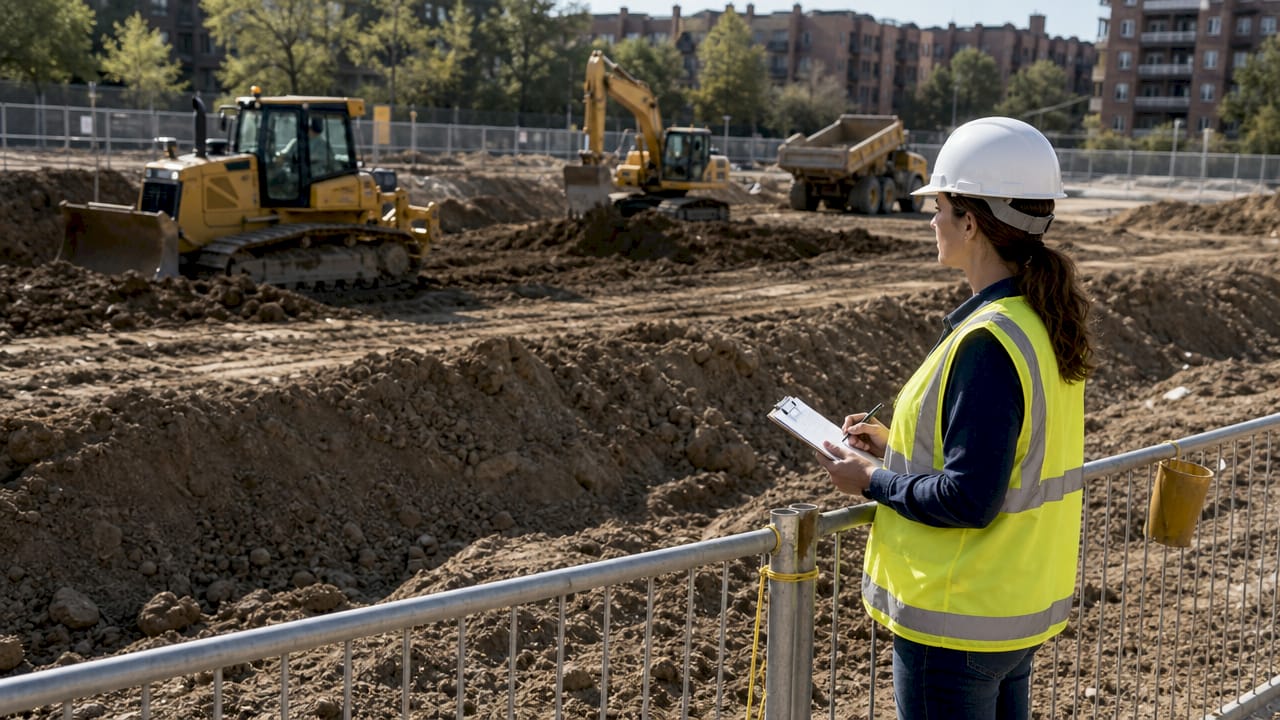
Horizontal development financing funds every site improvement that happens at or below grade before a single structure goes up. The industry term for this phase is “horizontal construction,” named because the work extends across the land rather than rising above it. Vertical construction financing, by contrast, funds the buildings themselves.
The scope of horizontal development funding is broader than most first-time developers expect. This loan type supports grading, road construction, sewer and water installation, power infrastructure, curbs, gutters, sidewalks, and street lighting. Each of these components must meet municipal standards before local authorities issue vertical building permits.
| Expense Category | Typical Components | Primary Cost Driver |
|---|---|---|
| Earthwork and grading | Cut and fill, compaction, erosion control | Site topography and soil conditions |
| Road construction | Access roads, curbs, gutters, paving | Linear footage and traffic load requirements |
| Utility installation | Water, sewer, electric, gas, telecom | Depth, distance to mains, and capacity specs |
| Drainage systems | Storm drains, retention basins, culverts | Impervious surface area and local codes |
| Perimeter improvements | Fencing, sidewalks, street lighting | Project type and municipal requirements |
Horizontal financing applies across residential subdivisions, commercial pad sites, and mixed-use developments. A residential subdivision requires roads and utility stubs to each lot. A mixed-use development requires shared infrastructure serving both retail and residential components. In each case, the horizontal phase sets the physical and financial foundation for everything that follows.
Pro Tip: Get municipal pre-approval on infrastructure plans before approaching horizontal lenders. Lenders move faster and price more favorably when permit risk is already resolved.
How does horizontal financing differ from vertical construction financing?
Horizontal financing focuses on site preparation and infrastructure, while vertical financing covers the buildings erected above ground. This distinction matters because lenders treat each phase as a separate risk event with different collateral, timelines, and underwriting criteria.
| Factor | Horizontal financing | Vertical construction financing |
|---|---|---|
| Collateral | Raw or partially improved land | Improved land plus structure in progress |
| Loan term | Typically shorter, tied to site work completion | Longer, tied to construction and lease-up |
| Draw structure | Milestone-based infrastructure completions | Inspection-based construction draws |
| Lender risk focus | Entitlement, municipal approval, contractor execution | Construction cost overruns, absorption, and lease-up |
| Exit or takeout | Vertical construction loan or lot sales | Permanent loan, sale, or refinance |
Lenders often treat these phases separately because the risk profile changes significantly once infrastructure is in place. A horizontal loan closes against raw or entitled land. A vertical loan closes against a site with completed infrastructure and a clear path to certificate of occupancy. Fragmented financing across multiple lenders creates coordination risk. Delays in the horizontal phase push back the vertical loan closing, which can trigger cost overruns and equity erosion.
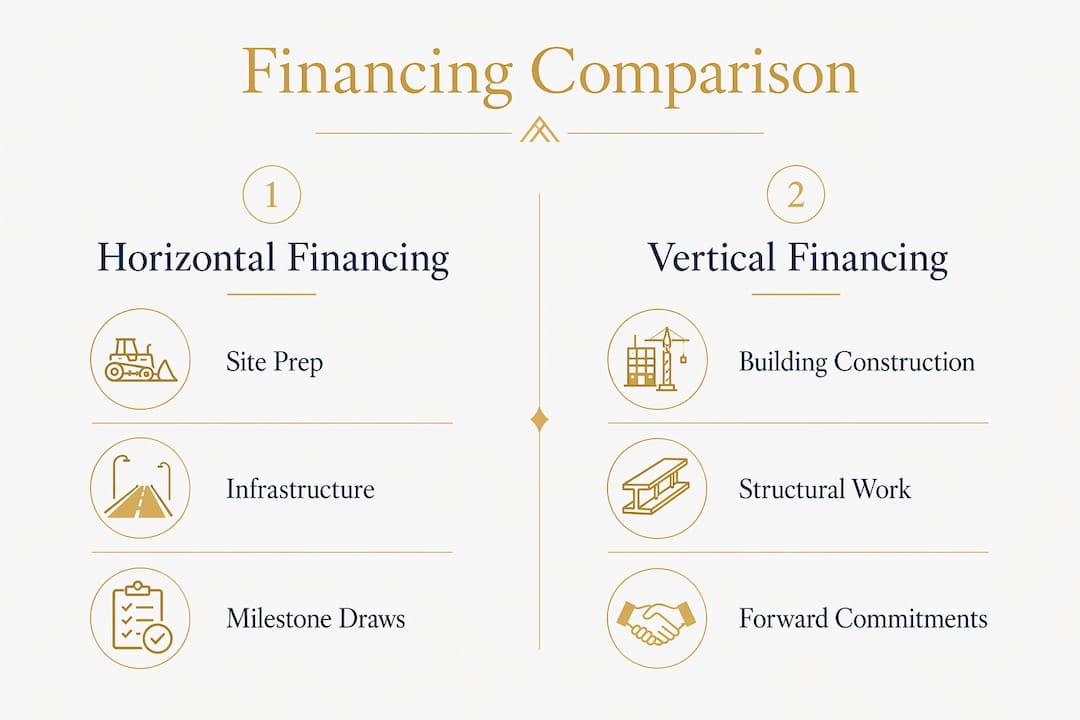
Effective coordination between horizontal and vertical lenders is not optional. Multi-phase risk allocation and clear communication between lenders maintain project momentum and satisfy municipal requirements. Developers who treat these two phases as a single integrated capital plan consistently outperform those who finance them in isolation.
Pro Tip: Negotiate a forward commitment for your vertical construction loan before you close your horizontal loan. This eliminates the most common source of project delays: the gap between horizontal completion and vertical loan closing.
What structures and processes make horizontal financing successful?
A successful horizontal financing structure aligns draw schedules strictly with infrastructure milestones. Misalignment in draw schedules forces expensive equity bridging for developers. When draws lag behind contractor invoices, developers must cover the gap with their own capital, which erodes returns and can stall work.
The draw schedule should tie each funding release to a verifiable milestone: finished grading, utility connectivity, road base completion, or municipal inspection sign-off. This protects both the lender and the developer. The lender controls disbursement against confirmed progress. The developer maintains contractor relationships by paying on time.
Lenders prioritize developers with workable, risk-allocated structures over those simply seeking the lowest rate. Pricing is secondary to a sponsor’s demonstrated ability to coordinate infrastructure delivery across multi-phase timelines. A well-prepared loan package shows the lender exactly how risk is distributed among the developer, general contractor, and subcontractors.
Common pitfalls in horizontal financing and how to avoid them:
- Undefined contractor scope: Require fixed-price contracts with performance bonds before loan closing to prevent cost overrun disputes.
- Permit delays not priced into the timeline: Build a 60-day buffer into your horizontal loan term for municipal review cycles.
- Equity gap at draw milestones: Model your cash flow against the draw schedule before closing to identify shortfalls in advance.
- No forward take-out commitment: Secure a letter of intent from your vertical lender before horizontal closing to eliminate refinance risk.
- Single-lender dependency: Understand your lender’s appetite for the full capital stack. Some lenders can finance land acquisition through construction under one integrated facility, which reduces coordination risk significantly.
Pro Tip: Present your lender with a single project execution plan that covers both horizontal and vertical phases. Lenders who see the full picture commit faster and structure more favorable terms.
What are the strategic benefits of horizontal development financing?
Horizontal development offers a shorter, more predictable investment cycle than vertical construction. Faster execution reduces exposure to prolonged market volatility. A developer who completes the horizontal phase and sells finished lots recycles capital in a fraction of the time required to build, lease, and stabilize a vertical project.
This shorter cycle appeals to investors who want defined exit points without the absorption risk of a completed building. Finished lots or pad-ready sites carry clear market values. Buyers for those assets, whether merchant builders or owner-users, are active in most markets regardless of interest rate conditions.
The strategic benefits of horizontal development funding include:
- Increased land value: Raw land becomes significantly more valuable once infrastructure is in place and permits are secured.
- Reduced market timing risk: Shorter project cycles mean less exposure to rate movements and demand shifts.
- Faster capital recycling: Developers can redeploy equity into the next project sooner than a vertical build allows.
- Broader lender access: Private money lenders often prefer horizontal projects because they evaluate execution plans and asset potential rather than strict credit history.
- Cleaner capital stack: Horizontal-only projects carry a simpler financing structure with fewer moving parts than a full ground-up vertical development.
Private lenders are an underused resource for horizontal financing. They fund based on execution plans and asset use rather than rigid financial background requirements. This makes them particularly relevant for smaller-to-mid-size investors who may not meet traditional bank thresholds but have strong project fundamentals.
Pro Tip: When selecting a financing partner for horizontal work, prioritize lenders with direct experience in infrastructure-phase draws. A lender unfamiliar with milestone-based disbursements will slow your project at every draw request.
Key Takeaways
Horizontal development financing is the foundational capital phase that determines whether a real estate project reaches vertical construction on time and within budget.
| Point | Details |
|---|---|
| Definition of horizontal financing | It funds site infrastructure including grading, roads, utilities, and drainage before vertical construction begins. |
| Draw schedule alignment | Tying draws to verified milestones prevents equity bridging and keeps contractor cash flow intact. |
| Horizontal vs. vertical distinction | Lenders treat each phase separately due to different collateral, risk profiles, and exit strategies. |
| Lender priorities in 2026 | Risk allocation and execution clarity matter more to lenders than rate competition alone. |
| Strategic investment value | Shorter cycles and faster capital recycling make horizontal projects attractive in volatile markets. |
What I’ve learned from watching horizontal deals succeed and fail
The developers who execute horizontal projects well share one habit: they treat lender alignment as a project deliverable, not an afterthought. I’ve seen sponsors spend months negotiating rate and ignore draw schedule mechanics entirely. That is where projects break down. A 25-basis-point rate difference means nothing if your contractor stops work because a draw was delayed two weeks waiting for a lender inspection.
The other pattern I’ve observed consistently is the cost of fragmented financing. Developers who close a horizontal loan with one lender and then scramble to find a vertical lender six months later lose time, lose momentum, and sometimes lose the project. The forward take-out commitment is not a nice-to-have. It is the single most important piece of the capital plan.
The financing environment in 2026 rewards sponsors who present complete, well-documented execution plans. Lenders are not pulling back from horizontal deals. They are being selective about sponsors who demonstrate they understand multi-phase coordination. If you can show a lender exactly how risk is allocated at every stage, from grading through utility completion to lot delivery, you will find capital available at terms that reflect your preparation.
Proactive communication among all stakeholders, including the municipality, the general contractor, the horizontal lender, and the forward vertical lender, is what separates projects that close on schedule from those that don’t.
— Jerry
How Brookmontcapital structures horizontal and construction financing
Brookmontcapital works with real estate developers and sponsors to structure financing across both horizontal and vertical phases of ground-up projects. The firm sources capital from institutional lenders, debt funds, and private equity partners with direct experience in infrastructure-phase draws and milestone-based disbursements.
Brookmontcapital can structure facilities that cover land acquisition, horizontal site work, and vertical construction under a single coordinated capital plan. That approach eliminates the lender coordination risk that stalls most multi-phase projects. Developers working on residential subdivisions, commercial pad sites, or mixed-use ground-up projects can access Brookmontcapital’s full financing solutions to evaluate terms, structure, and lender fit for their specific project.
FAQ
What is horizontal development financing in real estate?
Horizontal development financing is specialized capital that funds site infrastructure, including grading, roads, utilities, and drainage, before vertical construction begins. It is the first financing phase of any ground-up real estate development project.
How does horizontal financing differ from a construction loan?
A construction loan funds the vertical building phase above ground, while horizontal financing funds the site preparation and infrastructure work that must be completed before vertical permits are issued. Lenders treat these as separate loan products with different collateral and risk profiles.
What does a horizontal development loan typically cover?
A horizontal development loan covers earthwork and grading, road construction, sewer and water installation, storm drainage, sidewalks, curbs, gutters, and street lighting. These improvements must meet municipal standards before building permits are issued.
Who provides horizontal development financing?
Horizontal development financing comes from banks, debt funds, and private money lenders. Private lenders are particularly active in this space because they evaluate project execution plans and asset potential rather than relying solely on borrower credit history.
Why do lenders require milestone-based draws for horizontal projects?
Milestone-based draws protect both the lender and the developer by tying each disbursement to a verified infrastructure completion, such as finished grading or utility connectivity. Misaligned draw schedules force developers to bridge funding gaps with expensive equity, which erodes project returns.